

After seeing nearly 100 countries post record electric vehicle sales in 2025, the International Energy Agency is projecting that global sales will approach 30% of all new vehicles this year, just as Canada posts a 75% surge in EV sales in March compared to the same month last year.
EV sales increased by 20% last year, with more than 20 million battery-electric and hybrid cars rolling off the lots, the IEA reports this morning in its annual Global EV Outlook. Chinese automakers supplied about 60% of the fleet, with European and North American manufacturers each providing about 15%, and EVs accounted for at least 10% of new car sales in about 40 countries.
By 2035, even with no advances in government policies, the Paris-based agency sees the global EV fleet growing more than six-fold, from 80 to 510 million vehicles-not including two- and three-wheelers that are already electrifying rapidly in many developing countries.
"The growing popularity of EVs has marked a major shift for car markets and the energy system as a whole-and it is providing some relief now amid the largest oil supply shock in history," IEA Executive Director Fatih Birol said in a release. "Looking ahead, the falls we have seen in battery prices and the potential policy responses to the current global energy crisis are set to provide further momentum in EV markets."
"The ongoing energy crisis resulting from the conflict in the Middle East has brought reliance on oil imports into sharp focus in many countries," the report adds. "The road transport sector represents close to half of oil demand today, and policy responses to the long tail of the current crisis stand to shape the global car market for years to come."
Just days before the IEA release, Clean Energy Canada reported that 2026 was shaping up as a "comeback year" for EVs. In the first month after the federal government restored its $5,000 rebate for new EV purchases-and the first month when Canadians saw higher gasoline prices due to the American/Israeli war on Iran-EVs rose to 12.2% of new vehicle sales in March, up from 6.5% a year earlier.
Those numbers included year-over-year increases of 136% in Quebec, 53% in British Columbia, and 40% in Ontario.
"The anecdotal evidence that Canadians were increasingly looking to go electric was strong, but today's numbers are unmistakable," said CEC Director of Policy and Strategy Joanna Kyriazis. But "while price matters, clarity is similarly important. Last year's EV rebate pause caused many would-be EV buyers to wait on the sidelines, artificially deflating normal EV demand. That is now being rectified."
Kyriazis said the next steps will be to make sure Canadians have access to affordable EV models and introduce tough federal tailpipe emission standards. She added that the limited introduction of Chinese EVs "is already having an impact, with Tesla recently significantly dropping the price of its popular Model 3 after shifting production back to Shanghai."
The IEA reports that:
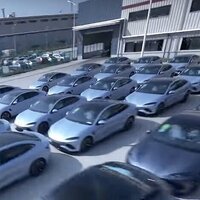
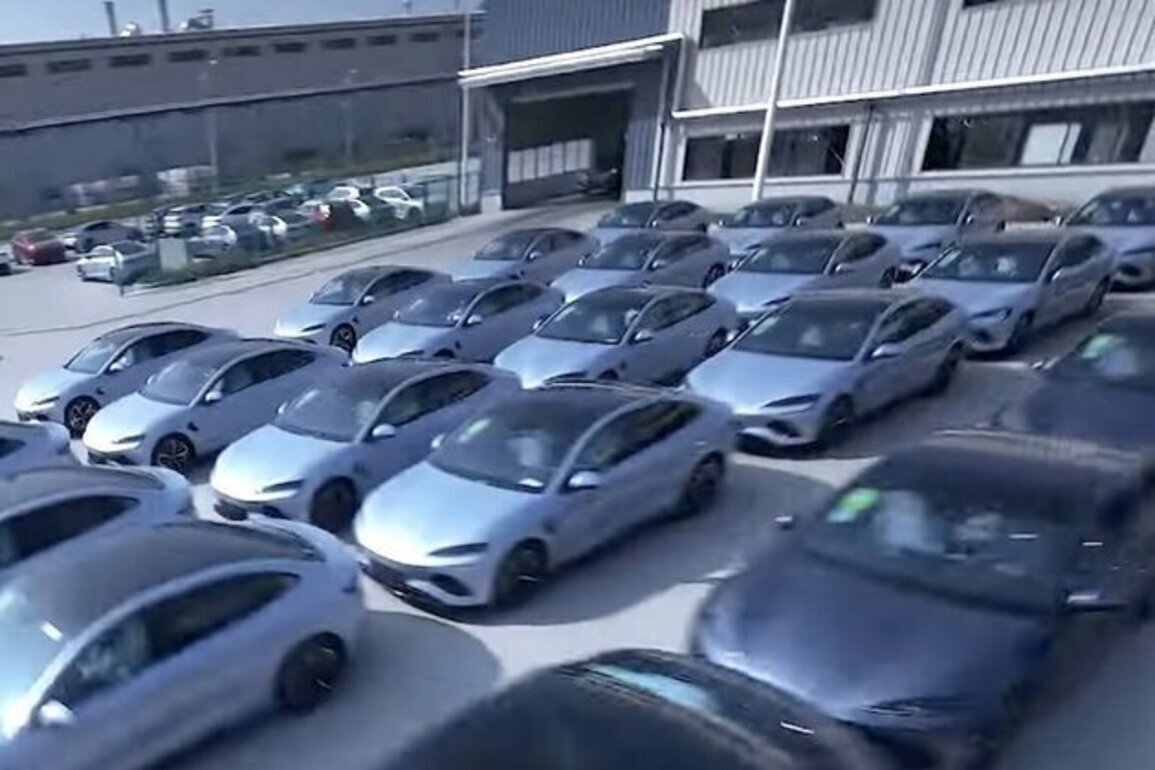
China accounted for nearly three-quarters of the world's EV production last year, and doubled its exports to more than 2.5 million vehicles.
China also dominated EV supply chains, producing more than 80% of the world's battery cells and "even higher shares of production of key materials" for batteries.
Global electric truck volumes more than doubled last year, rising to one in 10 new sales. Once again, China accounted for the vast majority of the vehicles.
High gasoline prices due to the continuing disruption in the Strait of Hormuz are sharpening consumers' focus on the lower cost of owning and operating an EV. So far this year, annual fuel savings have increased 35% compared to 2025.
In the first three months of this year, global EV sales were actually down 8% from 2025, at 3.9 million. But that was largely due to policy changes that depressed domestic sales in both China and the United States. The IEA reports year-over-year increases of 80% in the Asia Pacific excluding China, 75% in Latin America, and 30% in Europe.
Most major automakers are improving the technology in their EVs, following the lead of their "pure-play" EV competitors, while reductions in EV charging times may reduce peak demand on power grids. Rising power requirements from EVs could be a challenge for some electricity grids, but "measures such as smart charging, which reduces peak demand by shifting charging loads, or vehicle-to-grid (V2G)-which allows EVs to feed electricity back to the grid-can offer additional flexibility."
While EVs stalled out at about 10% of total sales in the United States, Politico reported last week that "the walls that once kept Chinese electric vehicles out of the western economies are quickly developing some major cracks." And that's got the Detroit Three automakers in a bit of a panic. The worry was that Donald Trump's summit last week with Chinese President Xi Jinping "could accelerate the entry of cheap EVs, wiping out the nascent U.S. EV sector at a time when fuel costs are soaring and rising car prices are souring public sentiment."
While nothing of the sort seems to have emerged from the summit-at least, not yet-"they're absolutely more than worried - they're scared stiff," Michael Dunne, CEO of the Dunne Insights automotive consultancy, told Politico. "Imagine if the Chinese come in with a $25,000 EV. That could catch like wildfire."
Source: The Energy Mix