

With even fossil-producing countries like Saudi Arabia, Norway, and the United Kingdom pursuing climate strategies and working to reduce emissions, the federal government will miss the "reality of the world we're in right now" if it dilutes its carbon pricing regime in response to "nonsense" arguments from the fossil fuel lobby, a leading Canadian climate policy analyst says.
"It's not an exaggeration to say that the creation of a coherent, effective industrial carbon price is increasingly the cost of admission to expanding trading relationships around the world," Canadian Climate Institute (CCI) President Rick Smith told The Energy Mix in an interview Monday. And it's "just nonsense [for the industry to say] that the current level of the industrial carbon price and the contemplated new level are going to be too onerous for our industry to comply with."
The Climate Institute, which Smith says is the only organization to have modelled the impact of industrial carbon pricing for every fossil fuel facility in the country, previously placed the average cost at the equivalent of one Timbit (about 30 to 50, depending on flavour and location) per barrel-at a time when the price of oil was around US$60 per barrel, en route to about $100 today.
The current industrial carbon price claws back 9 out of that price, and from the windfall profits it produces for Canada's largely U.S.-owned oil and gas industry. Even the highest carbon price Canada or Alberta have considered is "much lower than companies are paying in other jurisdictions," he said. "So it's just a ridiculous assertion that this is in any way a material cost for oil and gas companies."
The CCI's Smith was speaking not very many hours before news leaks indicated a deal between Prime Minister Mark Carney and Alberta Premier Danielle Smith to postpone implementation of industrial carbon pricing in Alberta from 2030 to 2040 and set the "effective" price at $130 per tonne, well short of the previous $170-per-tonne target.
He said it's "not an unfamiliar phenomenon in Ottawa" for industry groups to mount public lobbying campaigns when new policies are about to be announced. But "a lot of these arguments that we've heard from oil and gas industry voices over the last couple of weeks just don't hold any water"-and they also diverge sharply from the industry's own past pronouncements.
"It wasn't that long ago that oil and gas companies were vocally, eloquently in favour of industrial carbon pricing," Smith said. But "there's been a very significant shift in what oil and gas companies are saying in the last few months, and it's disappointing to see"-especially when, "with the benefit of five seconds of Googling, anybody could see that they're just completely wrong."
Not only are other countries moving swiftly to end their dependence on oil and gas. Smith said major oil and gas producers have joined the parade.
Saudi Arabia is "spending tonnes of money to bring down emissions in their oil sector, knowing that in a world driven by increasingly violent climate change impacts, oil and gas producers had better bring down their emissions or else that'll start to matter in the marketplace."
Norway and the United Kingdom both have industrial carbon prices.
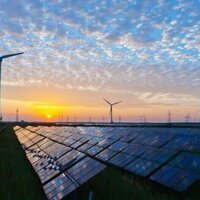
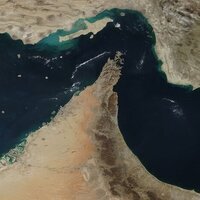
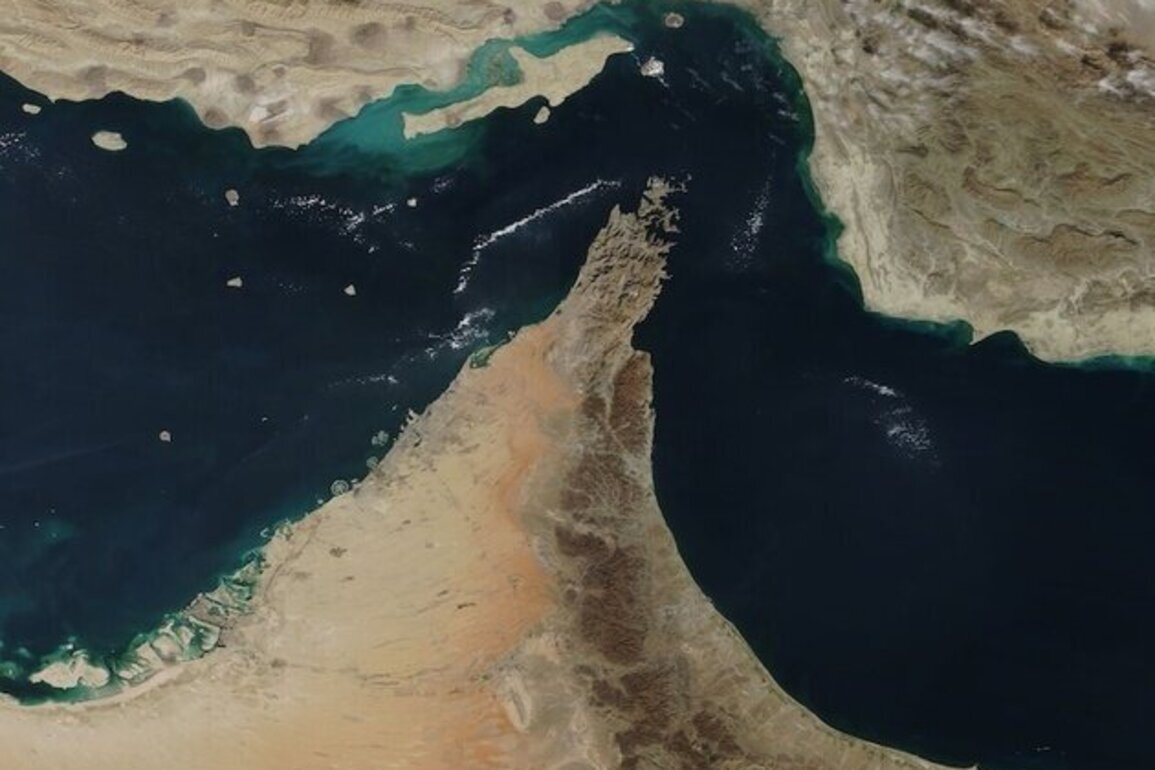
And now, the trend "has been turbocharged by the blockade of the Strait of Hormuz," he said, with countries across the world concluding that their national sovereignty and security demand "more reliable sources of energy supply within [their] own borders. That looks like wind, solar, batteries, in some cases nuclear. We can't rely on volatile, dodgy supplies of oil and gas anymore."
That massive shift puts Canada "at risk of missing what's truly important in the global economy at the moment, and mixing up short-term signals with where the global economy is actually headed," Smith said. It won't be good news for oil and gas that the disruption in Hormuz "has convinced the 75% of humans who live in countries without their own oil and gas resources, that oil and gas as a source of energy is risky, outside of their control, unpredictably priced, and quite often too expensive. Meanwhile, if you look at solar and wind and batteries, all of these costs have continued to decline dramatically... So that is what countries around the world are doing."
Retail markets have also seen "incredible uptake" of products like heat pumps and electric vehicles through March and April, amounting to "a dramatic increase in consumer purchases of non-fossil fuel cars and heating systems because oil and gas are so expensive and so unpredictably priced."
Between the energy security risks brought to the surface by Hormuz and the imperative "to bring down emissions in the atmosphere to protect ourselves over the next few decades," he added, "that is the trajectory of the world, and that's where the big economic opportunities lie. And the continuing obsessive focus of many in North America on the short-term opportunities of oil and gas is really a disservice to where we need to go, and an unproductive focus in terms of the future success of the Canadian economy."
Source: The Energy Mix