

Climate policy analysts and advocates where aghast Thursday when one of the country's leading climate think tanks reported that the country's progress reducing its greenhouse gas emissions stalled out completely in 2024.
Canada's emissions flatlined in 2024 at 694 million tonnes (Mt CO2e), with emissions essentially unchanged from the previous year, the Canadian Climate Institute reported. The stall comes at a time when the federation faces compounding pressures: devastating wildfires that highlight the rising costs of climate inaction, an economic slowdown tied to U.S. tariffs, intensifying competitiveness risks for industry, and affordability impacts on households.
"Today's results are damning. Canada's emissions have flatlined due to increased oil and gas output, and are set to increase if more fossil fuels are brought online-which is highly likely, given the approval for LNG Canada and Ksi Lisims these past few days," said Alex Cool-Fergus, national policy manager at Climate Action Network Canada. She added that the estimate doesn't factor in the Carney government's rollback of the consumer carbon price, nor the pause in its Electric Vehicle Availability Standard.
The net result is that. "Canada is becoming a climate laggard on the world stage, despite our rhetoric, and more LNG won't help the situation at all," Cool-Fergus added. "The PM says he's a numbers guy: now's the time to prove it. Major projects must move us towards steeper emissions reductions."
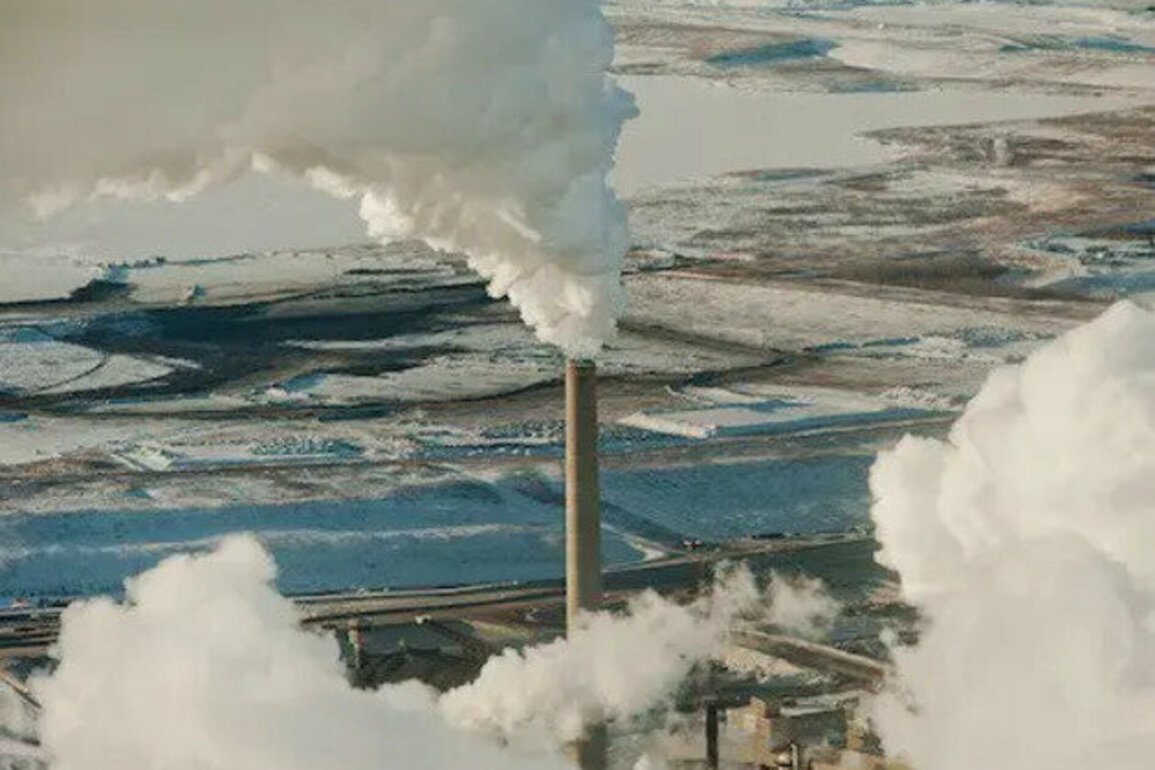
"According to the report, nearly all of the increases in greenhouse gas emissions in Canada can be tied to the oil and gas sector, and the vast majority of those emissions come from the oil sands," added Environmental Defence Canada Programs Manager Keith Brooks. "This underscores the need for an oil and gas emission cap and makes it abundantly clear that it would be deeply irresponsible to approve a new crude oil pipeline."
The Climate Institute's principal economist Dave Sawyer, co-author of the explanatory post that follows this intro, told CBC that fighting climate change is "not a pass-or-fail test" but cast the report as a push for the federal government to course-correct on climate action. "We have a short-term emergency right now with [U.S. President Donald Trump] and the economic impacts of the tariffs, but that's not a reason to kill the long-term policy signals and expectations," he said.
Environment and Climate Minister Julie Dabrusin told CBC the government still has some tools in its emission reduction toolbox. "The way we're approaching it, it's a moral obligation to fight climate change for the future, our future generations," she said. "It's existential."
(analysis republished from the 440 Megatonnes blog)
According to the latest Early Estimate of National Emissions (EENE) from the Climate Institute's 440 Megatonnes project, the oil sands added 3 megatonnes to the country's emissions tally in 2024, eclipsing all other sectors' contributions. Emissions sat just 8.5% below 2005 levels last year, leaving the gap unchanged to Canada's 2030 target, which requires a 40 to 45% reduction from 2005 levels.
This lack of progress in 2024 is concerning given the significant setbacks in policy, at both the federal and provincial level, since that year. This has included the consumer carbon tax repeal, the stalling of electric vehicle (EV) policies across levels of government, weakened industrial carbon pricing across several provinces, and the prospect of returning to coal-fired power in Saskatchewan. These changes threaten fragile progress on the emissions front, while record oil sands production and multiple liquefied natural gas (LNG) facilities under construction will put upward pressure on national emissions.
This is the fourth time 440 Megatonnes has calculated an early estimate of emissions-each time it has proven very close to the federal government's final calculations. This year we are also looking at the trend in emissions implied by the 2024 EENE.
The analysis finds that, based on current policies and estimated emissions in 2024, Canada is on track to reduce emissions just 20 to 25% below 2005 levels by 2030-putting the legislated target effectively out of reach. This outcome falls well below the Institute's previous emissions projections for all legislated, developing, and announced policies. At this point, achieving Canada's 2030 target would require year-over-year reductions equal to 40 Mt-far beyond the ambition of current policy.
While every megatonne of emissions reduced is important to avert dangerous and costly climate impacts, missing the 2030 emissions target by a wide margin would leave Canada well off the path to its 2035 and 2050 targets, forcing much deeper and more expensive emissions reductions later.
A federal, provincial, and territorial policy reset in 2025 is an opportunity to restore momentum, focusing on cooperative action with proven tools, including strengthened methane regulations, modernized industrial carbon pricing, and cleaner vehicles and fuels.
A deep dive into the numbers shows that the stalled national emissions look set to trend upwards (wonk alert: the second derivative is positive, indicating momentum is accelerating to more future emissions). Taken together, these signals point to a troubling conclusion that Canada's emissions reduction progress to date is fragile.
Increased emissions from oil and gas, particularly oil sands production, leads the momentum shift, while emissions reductions from other large sectors (transport, buildings, and industry) are stagnating or slowing. Canada's electricity sector-which has seen sustained progress over many years-can't counteract rising emissions from other sectors, given its declining share of national emissions.
Here are some top takeaways from the 2024 emissions estimates:
Oil and gas rose 1.9% in 2024 , accounting for 31% of national emissions, with oil sands emissions surging 3.4% on record production.
Transportation (23% of national emissions) was close to flat, falling 0.1%, similar to the change in 2023 (+0.1%). Momentum in the sector is trending down as decarbonized fuels and efficient vehicles offset an increase in travel.
Buildings (12% of national emissions) declined 1.2%. That decline is considerably slower than the 6.4% fall in 2023 due to a much colder year in 2022. Emissions from buildings would have been at least 2 megatonnes higher in 2024 if Canada had experienced a normal weather year.
Heavy industry (11% of the national total)dropped 0.6% in 2024. That reversed the prior year's 0.3% increase, although progress was uneven across sectors.
Electricity (7% of national emissions) continued to decarbonize, down 1.9% from 2023 levels. The sector now sits at 59% below 2005 levels. Yet due to its increasingly small contribution to national emissions, the sector's progress in emissions reductions cannot offset the upward momentum seen in other sectors. Electricity's success suggests that when federal, provincial, and territorial policies are harmonized and aligned with rapidly evolving technology changes, emissions reductions can build speed.
Canada's success in decoupling economic growth from emissions is faltering. While national emissions in 2024 were down 8.5% since 2005 despite an economy that has grown 70% larger, the rate at which this decoupling is happening has slowed. In 2024, emissions intensity of Canada's economic growth-the emissions produced per unit of GDP-fell just 1.5%, well below the historical norm.
The per-barrel emissions intensity of oil sands production-an important driver of national emissions-suggests the downward trend seen since 2005 has been stabilizing after 2017 rather than accelerating further. In recent years, efficiency gains across the economy have kept economic growth from pushing emissions higher. With that progress now weakening, national emissions are at risk of tilting back toward more emissions-intensive growth.
Policy rollbacks and delays will exacerbate growth in emissions. The repeal of the consumer carbon tax could add roughly 20 megatonnes CO2e by 2030, the proposed oil and gas emissions cap has not been finalized, and the Electric Vehicle Availability Standard is paused. At the same time, provincial and federal EV subsidies have lapsed, which has slowed sales and undercut reductions in the transport sector.
There have been additional significant developments at the provincial level, as well. Provincial reluctance to strengthen large emitter trading systems-also known as industrial carbon pricing systems-is undermining the federation's most important climate policy. Among the five largest systems, Alberta has capped the carbon price at $95 and further weakening is anticipated; Saskatchewan has suspended its program entirely; Ontario has reduced incentives for trading, making the program less effective; Quebec faces pressure to shrink its cap-and-trade regime; and it remains to be seen whether British Columbia's new system design will deliver.
Owing to the recent rollbacks and ongoing uncertainty surrounding climate policies across the federation, both consumers and industry are likely less willing to invest in measures and technologies to reduce emissions. Put simply, the expectation through 2024 was that the long-term policy signal was at risk and managing carbon would return uncertain benefits.
Market forces are also reinforcing emissions-intensive growth. Major LNG facilities including LNG Canada (Phases 1 and 2), Woodfibre, Cedar, and Ksi Lisims are either already producing or scheduled to be producing before 2030, locking in record oil and gas production as an accelerant of national emissions. Add in a large number of proposed emissions-intensive projects of national interest that governments may be considering, and Canada's future emissions look set to climb rather than decline.
The flatlining of Canada's 2024 emissions emphasizes the fragility in its climate progress. The federation has made substantial progress on national emissions in years past, and collectively has the policy architecture to tune emissions downward at a reasonable and measured clip. But the recent shift in trends warns of rising upward pressure on emissions-indicating further action will be necessary to correct the course.
It's not too late to get back on track for 2035 and, ultimately, net zero emissions in 2050-but delay only makes the path to those goals steeper. A reset in federal, provincial, and territorial cooperation offers a chance to restore momentum with proven tools like methane regulations, industrial carbon pricing, and cleaner vehicles and fuels, so the federation's hard-won climate progress doesn't falter even more.
All orders of government have policy decisions to make in 2025 that will determine whether the fragile progress of the past two decades is secured or lost. And the outcome of those decisions will shape Canada's competitiveness, security, and stability for decades to come.
The main body of this story first appeared September 18, 2025 on the Canadian Climate Institute's 440 Megatonnes blog. Dave Sawyer is principal economist at the Canadian Climate Institute. Seton Stiebert is President of Stiebert Consulting and an advisor at 440 Megatonnes.
Source: The Energy Mix