

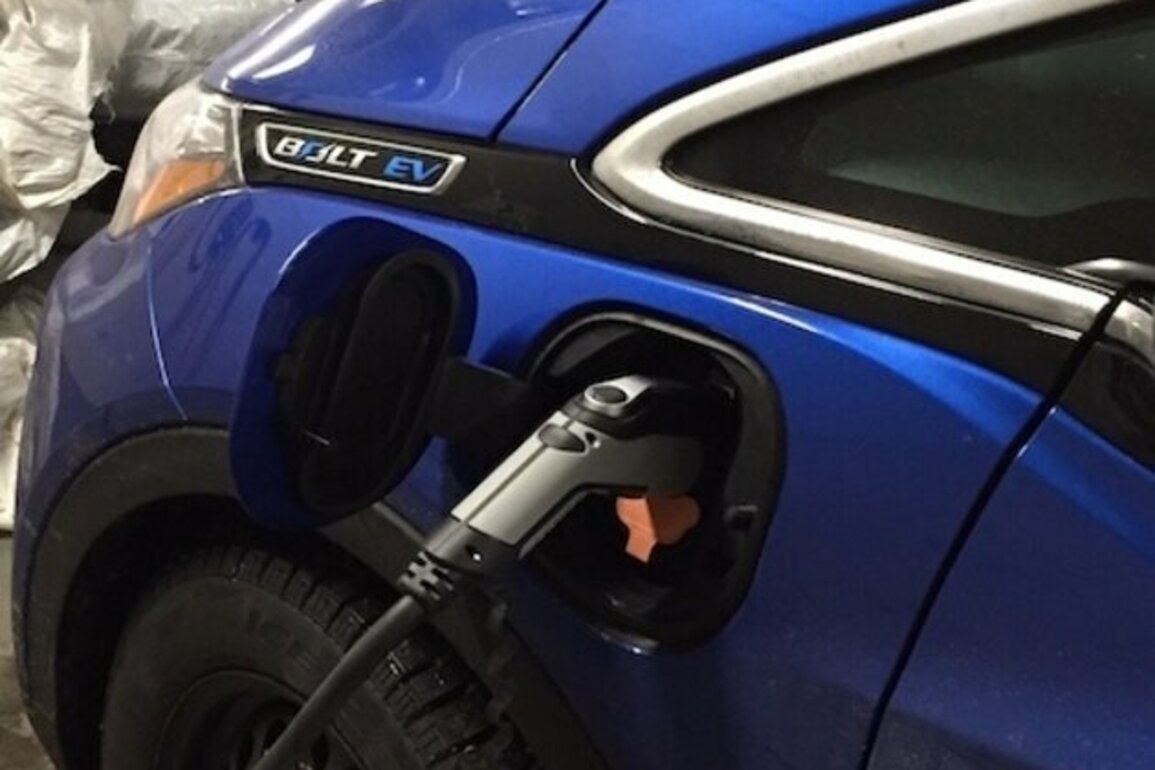
The federal electric vehicle sales mandate will not be implemented in 2026 as planned, Prime Minister Mark Carney said Friday, pushing back by at least a year a policy that would have set minimum sales targets for electric and plug-in hybrid vehicles.
Electric vehicle policy analysts responded immediately that the decision serves the interests of the auto industry, not Canadian consumers, and urged the government to sort out a domestic market that is missing out on more affordable EV models.
Introduced by the Liberals under former prime minister Justin Trudeau, the mandate would have required 20% of all new vehicles sold in Canada next year be electric, reports The Canadian Press.
The standard as written is to rise steadily each year until 2035, by which point all new light-duty vehicles sold in Canada were to be fully electric or plug-in hybrids.
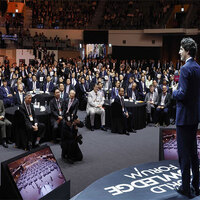
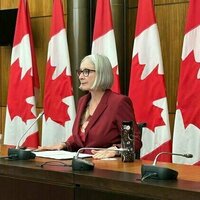
But at a press conference in Mississauga, Ont., Carney said he is suspending the mandate for 2026 and launching a 60-day review of the program to help find "future flexibilities and ways to reduce costs."
In a background document provided to journalists, the government said the review "will consider potential amendments to the annual sales targets, including the 2035 goal, and will explore possible additional flexibilities."
Carney said Canada's domestic automakers need more liquidity in the face of pressures from the ongoing trade war with the United States.
"They've got enough on their plate right now," Carney said. He did not commit to fully repealing the mandate, as the larger car manufacturers have recommended.
"We're using this as an opportunity, as part of a broader strategy on climate competitiveness, to look at all our measures to help get greenhouse gases down in the key sectors," he added.
In a release Friday, Adam Thorn, transportation director at the Calgary-based Pembina Institute, said Ottawa should have adjusted rather than pausing an EV Availability Standard meant to make a "diversity of affordable options-not just expensive luxury models" available to Canadians.
As it stands, Carney's Friday announcement "leans too heavily toward the concerns of the automotive industry, not the best interest of Canadians," Thorn said. "While automakers are facing serious challenges due to U.S. tariffs, the government could have maintained the overall purpose of the regulation by adjusting existing compliance flexibilities to provide automakers some much-needed breathing room."
But "pausing, rather than adjusting, the standard undermines the certainty businesses need to invest in charging stations, grid upgrades, batteries, supply chains, and work force training. It also unfairly penalizes companies that have already made investments in EV production and infrastructure based on an expectation of clear, consistent policy."
Joanna Kyriazis, policy and strategy director at Clean Energy Canada, cast the 60-day pause as an opportunity to do better.
"Canada has an EV affordability problem: we're missing out on the many lower-priced electric models being sold and enjoyed in countries around the world-saving not only the environment but also those drivers a lot of money on gas," she said in a release.
On The Hill Times, former federal assistant deputy minister Hugh Stephens said Canada can address stalled EV production and salvage national EV strategy by abandoning the "hardline stance" of a 100% tariff on Chinese steel, EVs, and EV components. That "technically unsubstantiated, politically driven decision" last October "brought Canada into line with the American tariff in the hopes that heavily subsidized EV vehicle and EV battery manufacturing plants in Canada would continue to be able to send their output to the U.S.," Stephens wrote.
But now, "our EV policy is now in shambles. Without guarantees of access to the U.S. market, EV production in this country is stalling. In the domestic market, costs remain high, which is leading to a sharp drop in buyers." A deal with China "can address some of these problems," bringing entry-level EVs with range of 600 to 800 kilometres at a cost of about $30,000.
In the Clean Energy Canada release, Kyriazis said Donald Trump's attacks on the U.S. EV sector have "carved a rift between the U.S. and the rest of the world-with Canada stuck in the middle, left with important choices to make. As EV adoption stumbles in North America, make no mistake: it is accelerating globally, with more than one in four cars sold this year projected to be electric worldwide. While short-term relief for automakers may be reasonable right now, consumers and industry also need more long-term certainty and alignment with the wider world."
Government relations veteran Aaron Freeman, managing partner of Toronto-based Pivot Strategic, said the delay points to a "go-big-or-go-home moment" for automakers.
"If Canada's auto sector does not have a clear path toward electrifying what they produce, the industry is doomed," he wrote. "This is especially true for the sub-$40,000 segment of the EV market, from which North American automakers are virtually absent."
It makes sense for advocacy around the EV mandate to be "situated within the political landscape we are operating in, and how it's changed," Freeman advised. "A strategic response-one that speaks to the current political moment-would need to address affordability, and create jobs in Canada's auto sector supply chain. We also have to acknowledge that this is not the moment for a big-spend program with no off-ramp toward fiscal prudence."
EV sales in Canada hit a monthly high of 18% last year when the government was offering consumer rebates of up to $5,000, CP writes.
Sales plunged after the government abruptly ended the popular rebate program when its funding ran out. The most recent data from Statistics Canada showed EV sales accounted for nearly 8% of all new vehicle sales in June.
Ottawa has promised to bring back consumer rebates for EVs but it hasn't said when-much to the annoyance of automakers, who say the lack of clarity is hurting EV sales as buyers await the return of the rebates.
The decision to suspend the mandate for a year comes after months of lobbying from the auto industry-and a recent pledge from the federal Conservatives to target the mandate when Parliament returns this month.
David Adams is president of the Global Automakers of Canada, which represents several carmakers, including Toyota, Honda, and Hyundai. He said he welcomes the suspension, but added Quebec and British Columbia-which also have EV sales mandates-need to follow Ottawa's lead.
"Our members are pleased that the government has recognized that the consumer adoption of electric vehicles is not where government nor industry anticipated it might be," Adams told The Canadian Press.
"A few short years ago this is what we had asked of the government, that they undertake a pause-and-review approach so they can figure out what the latent demand is for these vehicles, without necessarily incentives or anything else."
In July, Carney met with the heads of Ford Canada, Stellantis Canada and GM Canada, who told the prime minister there was no way for the industry to meet the targets set out in the EV mandate.
The head of the Canadian Vehicle Manufacturers' Association, which represents those three companies, said the pause on the EV mandate is "an important first step" but still called for its repeal.
"The EV mandate imposes unsustainable costs on auto manufacturers, putting at risk Canadian jobs and investment in this critical sector of the economy," Brian Kingston said in a media statement.
Speaking with The Canadian Press, Kingston said not even the return of consumer rebates for EVs would be enough to make the sales mandate sustainable.
"The only way you could achieve the arbitrary targets established in the mandate is by introducing very strong consumer incentives. You see a direct correlation between EV demand and incentives in the market," Kingston said, adding Ottawa would have to put up at least $1 billion a year to achieve a 20% sales target.
"That's not good public policy and that's not sustainable from a fiscal perspective."
In 2024, electric vehicles neared almost 15% of total new vehicles registered across the country but that was concentrated in two provinces. British Columbia and Quebec both exceeded the 20% marker-Quebec hit 31%-and accounted for almost three in every four new EVs registered across the country.
No other province even hit 10%.
Those numbers had B.C. Energy and Climate Solutions Minister Adrian Dix complaining that the delay is a made-in-Ontario policy when EV demand in his province is still high, CP writes.
"I want to say this: Their target for this year, we achieved four years ago," he said. "The issue here in Canada-and I think the federal government needs to engage in this a little bit-is first and foremost with Ontario."
On Friday, Carney promised new options to bring more affordable electric vehicles to Canadians, CP says. He wouldn't commit to repealing the 100% tariff Canada imposed on cheaper Chinese EVs, a measure up for review by the end of this month.
China imposed tariffs on Canadian canola in August which were widely seen as retaliation for the EV duties.
Canada introduced tariffs on Chinese EVs last year in lockstep with the United States. Kingston said repealing them would damaging the domestic auto industry by putting it on an uneven playing field with highly subsidized Chinese EVs.
Speaking with reporters on Parliament Hill in Ottawa, Conservative leader Pierre Poilievre said he wouldn't lift the tariffs on Chinese EVs as a way to support the canola sector.
Carney was also pressed by reporters on his overall commitment on climate change, given recent policy changes which moved away from aggressive climate action from the Trudeau government.
He said, in French, the fight against climate change is a "moral obligation" and he committed to reducing emissions, though he signalled it must be one in the broader context of trade and competitiveness.
"We will keep the industrial carbon pricing. We have to improve its function. And there will be a political strategy for climate competitiveness, and a strategy for nature," Carney said in French.
"We will put emphasis on results as it relates to greenhouse gas emissions."
Still, those words gave little reassurance to environmental groups who lambasted the government for its pausing of the EV mandate.
"What was the point of electing Mark Carney when we get Pierre Poilievre's climate policy?" said Keith Stewart, a senior energy strategist with Greenpeace.
"We should be aligning with Europe, which is doubling down on renewable energy and electric vehicles, rather than bowing before Trump's attack on people and planet."
The main body of this report was first published by The Canadian Press on Sept. 5, 2025.
Source: The Energy Mix