

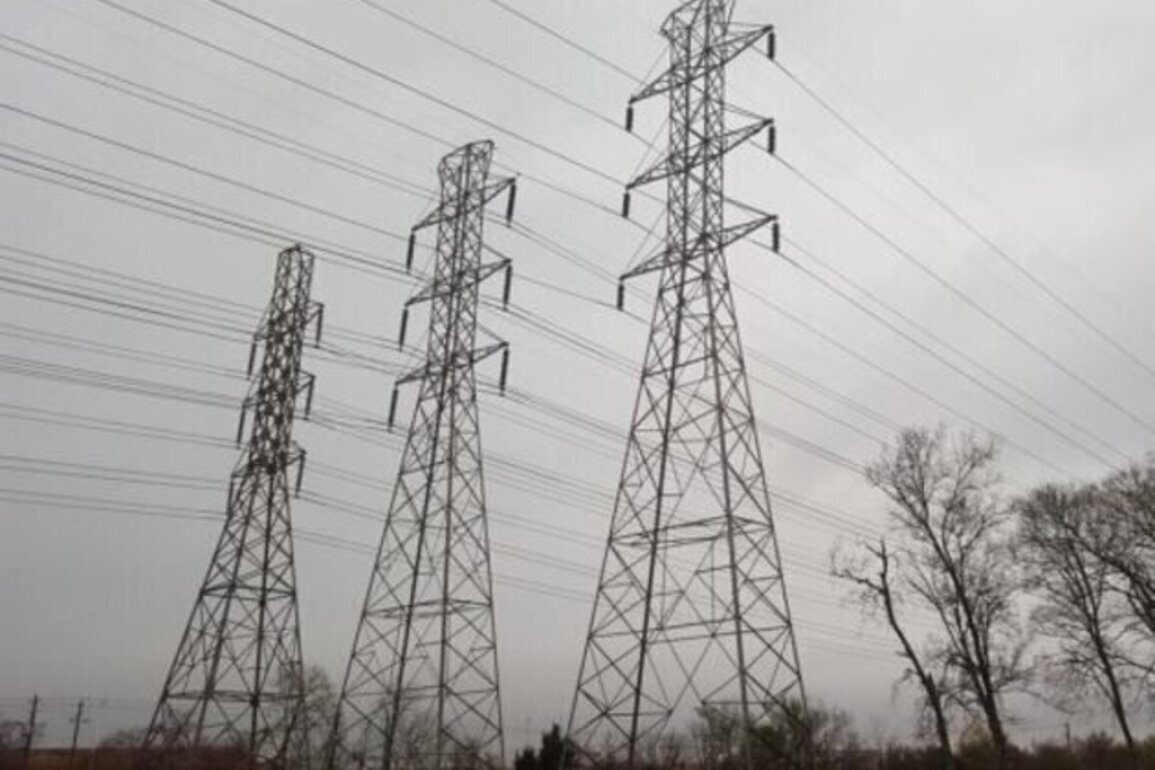
Several Canadian provinces face elevated risk of grid failures, and large parts of the United States are at high risk, according to an annual North American power system reliability assessment.
"This assessment is not a prediction of failure, but an early warning," John Moura, director of reliability assessment and performance analysis at the North American Electric Reliability Corporation (NERC), said in a release. "The path forward is still manageable, but only if planned resources come online and on time."
The increased risk stems from energy supply lagging behind a projected increase in electricity demand. Most new demand is linked to new artificial intelligence data centres and the digital economy, while other notable sources include large commercial and industrial loads, transportation electrification, demographic change, cryptocurrency, and heat pumps.
NERC's annual long-term reliability assessment identifies emerging risks to grids in six transmission regions spanning the U.S. and Canada. This year's report finds that the resource adequacy outlook for the North American Bulk Power System-the high-voltage transmission backbone of the grid, excluding local distribution systems-is "worsening." Thirteen of 23 assessment zones could face resource adequacy challenges over the next 10 years because of a mismatch between supply and demand. Summer peak demand is projected to grow 224 gigawatts over ten years-69% higher than last year's projection-while winter peak demand is projected to rise by 246 gigawatts.
Overall, the outlook is deteriorating from a year earlier, when NERC warned that rising demand would cause "mounting resource adequacy challenges" as old fossil fuel-fired power plants retire.
The types of new resources coming online also affect reliability, NERC says. Most of the new additions are battery storage and solar photovoltaic systems that are inverter-based and weather-dependent. Meanwhile, as fossil-fired generation retirements loom in the next five years, the agency says the system's ability to respond to demand spikes will be affected.
"The continuing shift in the resource mix toward weather-dependent resources and less fuel diversity increases risks of supply shortfalls during winter months," NERC writes.
The report adds to a "continuing political debate" over the condition of the United States' grid, writes the New York Times. While supporters of a fossil-fuelled grid, including the Donald Trump administration, say coal and gas are crucial for reliability, clean energy groups argue that batteries and renewables came to the rescue when coal and gas plants failed in a recent winter storm, and that Trump's anti-renewables stance is delaying the addition of critical power supply.
NERC's projected reliability shortfalls are most dire in the U.S., where five grid systems are at high risk, and several others show elevated risk. In Canada, grid operators in Quebec and the Maritimes, Sask Power, and Manitoba Hydro face elevated risk, while operators in Ontario, Alberta, and British Columbia are at normal risk.
The primary drivers of electricity demand vary by region in Canada. All grid operating systems are projected to see an increase in demand from large industrial loads, except for the Maritimes. Data centres are only included as primary drivers in Quebec and Ontario. Transportation electrification is a major factor in all provinces except B.C. and Ontario, and demographic changes are only noted for Manitoba and Quebec.
The Maritimes are the only Canadian grid region where heat pumps are listed as a primary driver. Heat pumps are also a primary cause of rising demand along the U.S. Eastern Seaboard.
Source: The Energy Mix